
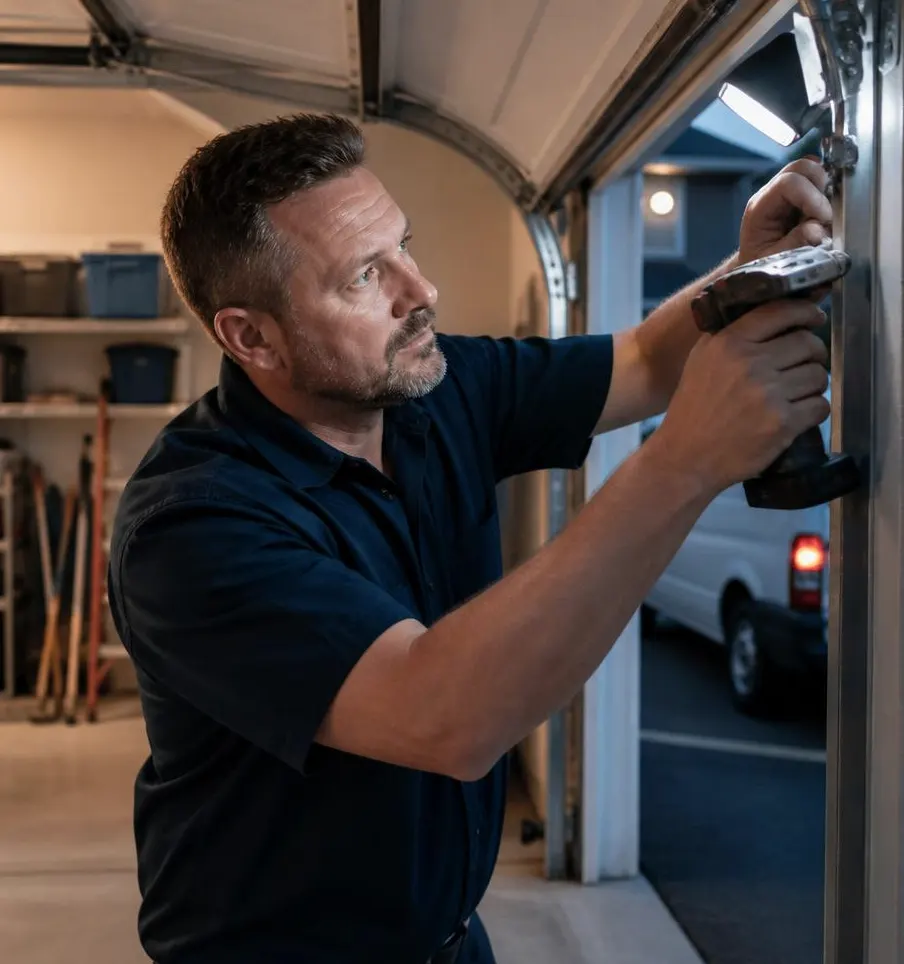
You pull into the driveway on the first genuinely cool morning of the year, hit the opener button, and the door groans its way up instead of gliding. Maybe it shudders halfway, or a panel doesn't sit flush against the frame the way it used to. Nothing dramatic happened overnight — but six months of heat, humidity, and afternoon downpours just caught up with your garage door the moment the weather finally changed.
Why the Season Change Hits Garage Doors Hard Here
Miami doesn't get a real winter, but the shift from wet, swampy summer air to the drier, cooler stretch that follows hurricane season still puts real stress on a garage door. Wood-composite panels and trim that absorbed moisture all summer start to shrink as humidity drops, which is exactly when homeowners notice new gaps along the edges of the door. Metal components that were constantly damp from storms and salt-laden coastal air have had months to quietly rust. And the day-to-night temperature swings that show up with the first cold fronts cause metal tracks and torsion springs to expand and contract more than they did during the steady heat of summer. None of this is dramatic on its own, but together it's enough to turn a smooth-running door into one that sticks, squeals, or hesitates.
Start With a Post-Hurricane-Season Hardware Check
Even if your home wasn't in the direct path of a storm this year, the wind-load hardware on your garage door — reinforcement struts, track brackets, lag bolts — takes a beating from pressure changes during any nearby system. Walk the inside of your garage and look for:
- Bolts or brackets that look loose, bent, or slightly pulled away from the wall
- Horizontal struts across the back of the door that appear warped or dented
- Track sections that have shifted out of alignment, even slightly
This is also a good time to test the door's balance. Disconnect the opener, lift the door halfway by hand, and let go. A properly balanced door should stay roughly in place. If it drops or shoots upward, the springs have lost tension — common after a season of extra strain from humidity-swollen panels making the opener work harder than it should.
Deal With Rust Before It Spreads
Salt air doesn't stop at the coastline; it travels inland on sea breezes and settles on anything metal, including garage door tracks, hinges, and springs. Combined with months of humidity and storm moisture, this is prime rust season for hardware that hasn't been checked in a while. Look closely at:
- Spring coils for orange flaking or pitting
- Roller bearings for stiffness or grinding instead of smooth rotation
- Hinges and bottom brackets where moisture tends to pool
Light surface rust can often be cleaned off and treated, but pitted or flaking springs are a safety issue, not a cosmetic one — a corroded spring is far more likely to snap under tension, and torsion springs carry enough force to cause serious injury if they fail while someone's nearby.
Reseal Gaps Before the Next Round of Rain
Afternoon downpours don't disappear just because the season is turning. Shrinking panels mean your weatherstripping may no longer seal the way it did in August, and gaps along the bottom or sides let water, dust, and the occasional palmetto bug straight into the garage. Run your hand along the bottom seal and side seals — if you feel air movement or see daylight through any section, it's time to replace that stripping rather than patch it. It's inexpensive, takes under an hour, and prevents the next heavy rain from pooling against stored boxes or tools.
Re-Lubricate Everything That Moves
Humidity and rain wash lubricant off hinges, rollers, and tracks faster than most homeowners expect, which is part of why doors start sounding rough right around this time of year. Use a silicone-based lubricant (not household oil, which attracts dust and grit) on hinges, rollers, and the torsion spring itself. Wipe the tracks clean first — a summer's worth of dust and moisture often leaves a gritty film that grinds against rollers every time the door moves.
Check the Opener and Backup Power
Cold fronts moving through South Florida can still bring gusty storms and brief power flickers even outside of hurricane season. If your opener doesn't have battery backup, a sudden outage means manually releasing the door — worth testing now, before you need to do it in the dark during a storm. While you're at it, test the auto-reverse safety feature by placing a block of wood in the door's path; it should reverse immediately on contact. This is also a good time to replace opener remote batteries, which tend to fail quietly after a humid summer.
When to Call Miami Garage Door
If you find rust on the springs, a door that won't hold its balance, or hardware that's visibly shifted, that's past the point of a DIY fix. Our Garage Door Maintenance service covers a full inspection of springs, tracks, rollers, and hardware, catching the kind of wear that builds up quietly over a Miami summer before it turns into a breakdown. If a spring is already corroded or the door is bouncing out of balance, our Spring Replacement service handles that safely with the right tension for your door's size and weight — not something to attempt with hand tools and a ladder.
Whether you're in Kendall, Doral, Coral Gables, or anywhere else across Miami-Dade, call Miami Garage Door for a seasonal inspection before the next cold front finds the weak spot for you.