
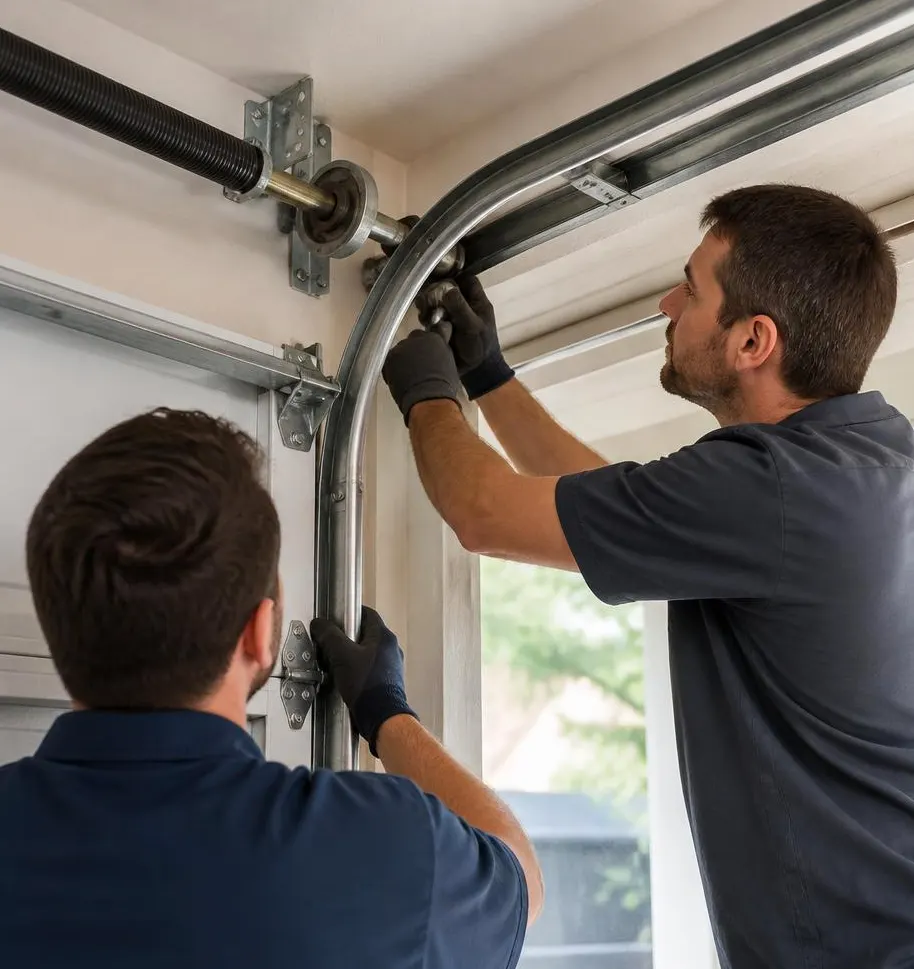
Rule of thumb: if your garage door feels stuck in Miami, it's not frozen — it's wet, swollen, or rusted
A garage door that won't budge here is almost never an ice problem. Miami doesn't get the hard freezes that seize up garage doors up north. What looks and feels like "frozen to the ground" is usually a weather seal glued down by standing water, hardware swollen from humidity, or hinges and tracks corroding from salt-laden air. The exception: a sharp cold front pushing overnight lows into the 40s can cause enough condensation on metal tracks and torsion springs to make a door noticeably stiffer for an hour or two after sunrise, especially in garages that stay shaded and damp. That stiffness isn't ice, but it behaves like a mild version of it — slow starts, extra resistance, a door that seems to "unstick" once it's moving.
Symptoms to watch for
- The door groans or jerks for the first foot of travel, then moves normally
- The bottom rubber seal looks pressed flat or suctioned to the slab after a storm
- The opener motor runs but the door doesn't move, or it reverses right after touching the floor
- The door feels noticeably heavier when you lift it manually
- Rust streaks near the hinges, tracks, or bottom corners of the panels
- A faint dragging sound as the door travels, even after it's fully open
What a technician checks, in order
1. The weather seal and threshold
This is the first thing to rule out because it mimics "frozen to the ground" almost exactly. Afternoon downpours push water under the door, and if drainage near the slab is poor, that water sits against the rubber astragal. Humidity swells the rubber, and it can genuinely suction itself to the concrete overnight. The fix is usually trimming or replacing the seal and clearing any debris or low spots that let water pool against the threshold instead of running off.
2. The tracks
Next is a visual and physical check of both vertical tracks for debris, rust pitting, or slight bends. Salt air speeds up surface rust even on tracks that look fine from a few feet away, and a rusty track creates drag that feels exactly like resistance from cold. The fix ranges from a simple cleaning and realignment to replacing a corroded section if the rust has pitted the metal enough to catch the rollers.
3. Rollers and hinges
Worn nylon rollers or rusted hinge pins are checked next, since they're the most common source of a jerky, uneven motion rather than a smooth glide. Humidity gets into the roller bearings and washes out lubricant faster than most homeowners expect. The fix is usually a fresh application of silicone-based lubricant (not WD-40, which attracts grit) and roller replacement if the nylon is cracked or the bearings are gritty.
4. Springs
Torsion and extension springs get inspected for rust and for any visible gap between coils, which signals lost tension. Cold mornings combined with humidity can accelerate corrosion on springs that aren't coated for coastal exposure, and a spring losing tension makes the opener work harder, which often looks like a "stuck" door that the motor is straining against. This is not a DIY fix — springs are under heavy load and release that load violently if handled wrong. The fix is a full spring replacement, matched to the door's weight and wind-load rating.
5. The opener
If the door hardware checks out, the opener's limit settings and sensors are next. Humidity swelling in wood or composite panels can shift the door's resting height by a fraction of an inch, enough to throw off limit settings that were fine a few months ago. Condensation on the photo-eye sensors near the floor can also cause random reversals that feel like the door is catching on something. The fix is resetting the travel limits and wiping down or realigning the sensors.
6. Panel swelling
Last on the list, because it's the least common but still shows up on older wood or composite doors: the panels themselves swell slightly in sustained humidity and bind against the track edges. This shows up as resistance along the entire travel path rather than just the first foot. The fix involves sanding the contact edges, adjusting track spacing slightly, or sealing/repainting exposed wood to slow future swelling.
Why this matters more after hurricane season
Doors built or reinforced to meet wind-load requirements carry heavier panels, stronger springs, and reinforced tracks — all of which put more strain on hardware that's already dealing with salt air and moisture swings. A door that performed fine all summer can start showing these symptoms the first time temperatures dip and humidity swings sharply overnight, which is exactly the pattern Miami sees heading into late fall and winter.
When to call Miami Garage Door
If your door is sticking, groaning, or reversing and the cause isn't obvious after checking the seal and tracks yourself, it's time to call. Our Garage Door Maintenance service covers a full inspection of tracks, rollers, hinges, and lubrication, which resolves most of the sluggish-door complaints we see this time of year. If the issue traces back to a corroded or weakened spring, our Spring Replacement service gets it swapped out safely with hardware rated for coastal conditions, so you're not dealing with the same problem again next season.
If your garage door in Miami, Kendall, Doral, Homestead, Coral Gables, Pinecrest, Cutler Bay, or Palmetto Bay is sticking, groaning, or not moving the way it should, call Miami Garage Door and we'll get it moving smoothly again.