
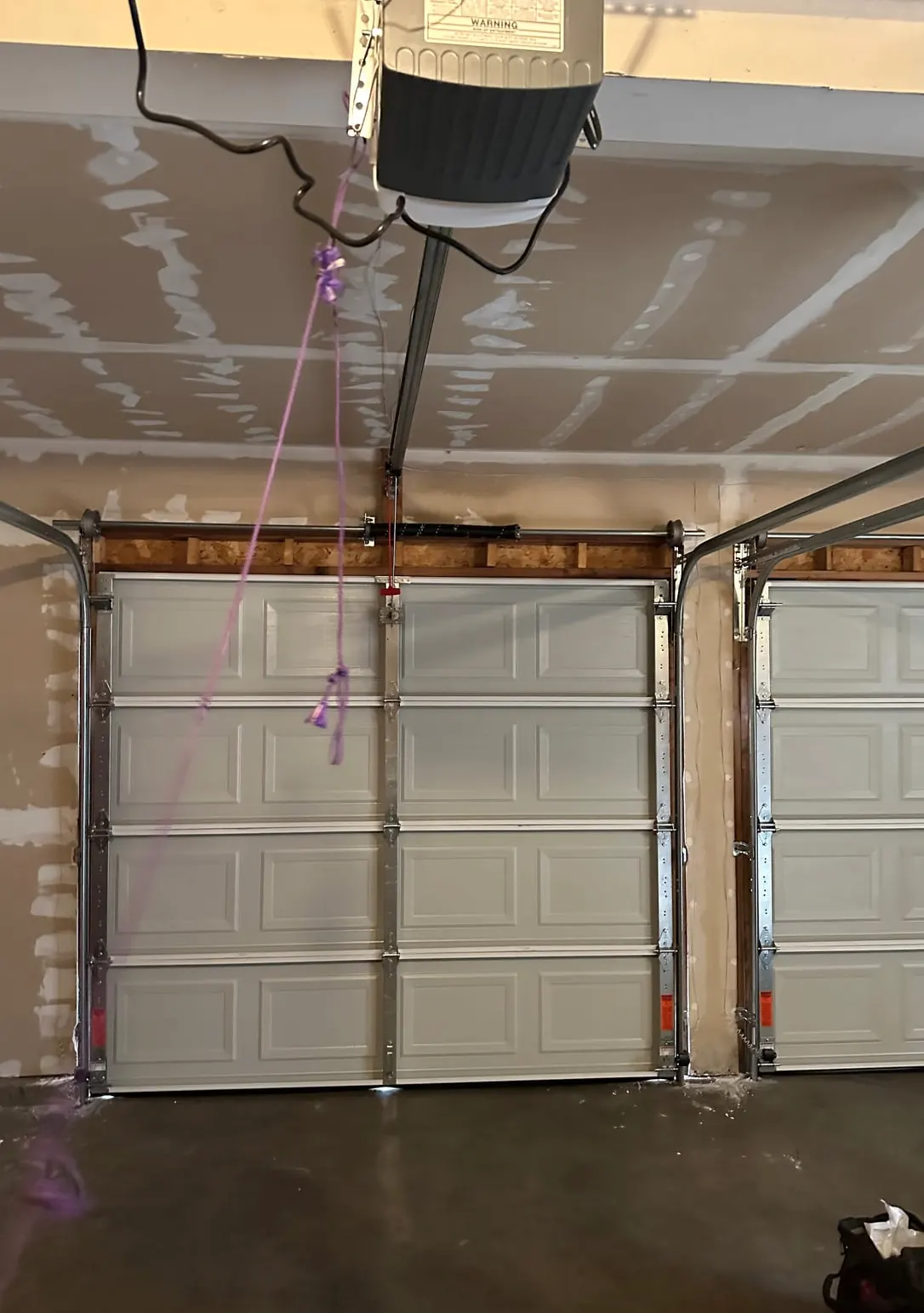
The power's out, rain is hammering the roof, and you need to get the car out before the next band of a storm rolls through. You look up at the garage door opener and see it: the red cord hanging from a handle near the track. You've seen it a hundred times and never touched it. Now you're standing there wondering if pulling it is going to fix your problem or create a new one.
What the Emergency Release Cord Actually Does
That cord is connected to a lever on the trolley, the part that rides along the opener's rail and physically pulls the door up and down. Pulling the cord disconnects the trolley from the drive mechanism, which means the opener is no longer holding or moving the door at all. Once it's disengaged, the door is just a heavy panel held up by its springs and running on its tracks, and you move it by hand.
This is the manual override every automatic garage door is required to have. It exists so a closed door never becomes a locked door during a power failure, a dead opener, or a motor that's burned out. It's a simple piece of hardware, but it only works in your favor if you understand what it's actually disconnecting and when.
When Pulling It Is the Right Call
There are a handful of situations where the release cord is exactly the tool you need:
- Power is out and you need to get a vehicle in or out before the opener has power again.
- The opener has failed — motor won't engage, you hear it humming but the door doesn't move, or the unit is clearly dead.
- You're trapped because the door won't respond to the wall button or remote and you need manual access right now.
- You're doing maintenance and need to move the door by hand to inspect rollers, tracks, or the bottom seal.
In all of these cases, pull the cord with the door in the closed position if at all possible. A closed door, once disconnected, just sits there under spring tension — it's stable and safe to then lift by hand.
When Pulling It Makes Things Worse
The cord becomes a problem the moment you pull it on a door that isn't in a safe, settled state. Here's what can go wrong:
The door is mid-travel
If the door is halfway open or closed when you disconnect it from the opener, nothing is holding it in place anymore except the springs — and springs aren't designed to hold a door at a random mid-point. The door can drop suddenly, sometimes fast enough to cause real injury to hands, feet, or anything underneath it.
A spring is already broken or weak
Torsion and extension springs carry almost the entire weight of the door. If a spring has broken or stretched out — which happens more often here thanks to humidity, salt air, and the expansion and contraction that comes with South Florida's heat swings — the opener's motor may be the only thing actually lifting the door at that point, even though it shouldn't be. Disconnect the trolley in that situation and the door can free-fall. A standard double garage door weighs well over 100 pounds; a single can still run 70-plus. That's not something you want dropping unassisted.
The track is bent or the rollers are seized
Salt air and humid swelling can cause rollers to stick or tracks to warp slightly over time, especially in homes closer to the coast. If the door is binding somewhere along the track when you pull the cord, manually forced movement can jump it off the track entirely, which turns a simple reconnect into a repair call.
How to Use the Cord Safely
- Close the door first whenever you have the choice. Disconnecting a closed door is low-risk; disconnecting one mid-travel is not.
- Look at the springs before you pull. A visibly separated coil, a door that already feels heavy or crooked, or a loud bang you heard recently are all signs a spring may be compromised — don't disconnect, call for a spring replacement instead.
- Lift gently to test once disconnected. The door should feel roughly balanced and stay in place when lifted partway. If it feels dramatically heavy or slams down, stop and leave it — that's a spring or cable problem, not a manual-operation problem.
- Reconnect correctly by closing the door fully, then pulling the cord again (or pushing the trolley release lever) to re-engage, and running the opener briefly to confirm it's catching properly.
- Don't use it as a workaround for a door that won't close, especially with storm winds picking up. If the door won't seal properly on its own, manual operation during high wind is not a safe substitute for a working opener.
Why This Matters More Here
South Florida's climate puts extra strain on the exact components that make the release cord safe or risky to use. Humidity and swelling can warp wood doors and tighten tolerances on tracks. Salt air accelerates rust on springs, cables, and hardware, which is often what leads to sudden spring failure rather than gradual wear you'd notice coming. And outages tied to hurricane-season storms mean Miami homeowners reach for that red cord more often than people in drier, calmer climates — which is exactly why it's worth knowing the difference between a routine pull and a risky one.
When to Call Miami Garage Door
If you've noticed the door feels unusually heavy when disconnected, drops faster than it used to, or you can see a gap or separation in the spring coil, don't keep operating it manually — call us for spring replacement before it fails completely. If the opener itself has stopped engaging and you're not sure whether it's the motor or something mechanical, our opener repair and installation service can diagnose it on the spot. And if you're dealing with a dead door during a storm and need someone now, that's exactly what our emergency garage door service is for.
If your release cord situation feels like more than a quick fix, give Miami Garage Door a call — we serve Miami, Kendall, Doral, Homestead, Coral Gables, Pinecrest, Cutler Bay, and Palmetto Bay, and we'll get your door safe and working again.